Media · Strategy · July 2025 · 8 min
What are the biggest barriers to successful media planning?
Fragmented platforms, overwhelming data and an AI skills gap — and what advertisers must do to navigate them.

Media planning is challenging in today's fast-changing world. For media planning, the task is even more complex, as we navigate diverse markets, platforms, and consumer behaviours. Looking at the current landscape, what are the biggest barriers?
Media Fragmentation
Media fragmentation offers both opportunities and challenges for advertisers. On the one hand, the spread of audiences across diverse platforms allows for more precise targeting of niche segments and highly specific demographics. Customised messaging becomes possible, enabling advertisers to connect with unique audience interests, drive stronger engagement, and achieve higher ROI. Digital platforms provide detailed performance metrics, allowing advertisers to refine strategies in real-time for improved results. (Kirk, 2023)
However, fragmentation barriers cannot be ignored. Paul Stringer's 'The Future of Media 2025' report from WARC highlights how the fragmented media landscape forces advertisers to spread efforts across numerous platforms to reach the same audience.
Traditional media like linear TV, which made up 41.3% of global ad spend in 2013, has dropped to just 14.3% (Stringer, 2025). Meanwhile, digital platforms dominate, with pure-play internet advertising expected to grow by 14.1% and account for 68.8% of global ad spend (Stringer, 2025).
This fragmentation creates significant hurdles for advertisers:
Rising Costs: Maintaining visibility across multiple platforms drives up expenses, as omnichannel campaigns require substantial resources to effectively integrate and manage. (Bold, 2024)
Platform-Specific Strategies: Each platform operates under unique rules and audience behaviours, demanding tailored campaigns. E.g., Connected TV (CTV) is the fastest-growing channel, with a 19.6% increase in ad spend projected for 2024, but its creative approach differs significantly from social or retail media (McDonald, 2024).
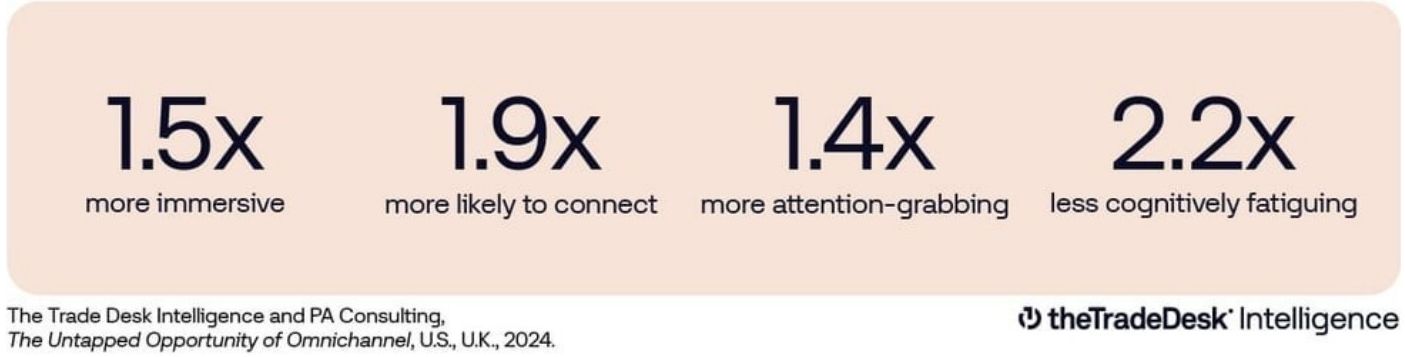
To succeed in today's fragmented media landscape, advertisers must adapt. Teams need training in omnichannel marketing, and investing in tools to integrate data across platforms is crucial. By tackling these challenges, brands can explore new formats, manage complexity, and stand out in a competitive market.
Data, Creativity & Brand Goals
Current trends reveal significant challenges for data and media planning. The overwhelming volume of data often pushes advertisers to focus on short-term metrics like clicks, sidelining long-term brand growth (Tiltman, 2024). A lack of standardisation across platforms complicates performance measurement, with 44% of strategists reporting misalignment on success metrics (Tiltman, 2024). Brand safety is another pressing issue, as only 44% of marketers feel confident in their processes, and many fear pausing spend on social platforms due to performance pressures (WARC Exclusive, 2024).
However, solutions are emerging. Ad verification tools are cutting fraud and improving campaign quality, saving up to $450,000 per billion impressions (WARC Best Practice, 2024). Standardising data across platforms is providing clearer performance insights, while AI-powered tools are using vast datasets to deliver personalised customer experiences (Walch, 2024). Conscious media investment is enabling brands to prioritise quality environments and align campaigns with broader values. (WARC Best Practice, 2024)
A test by DoubleVerify showed that authentic viewable rate increased for managed campaigns:
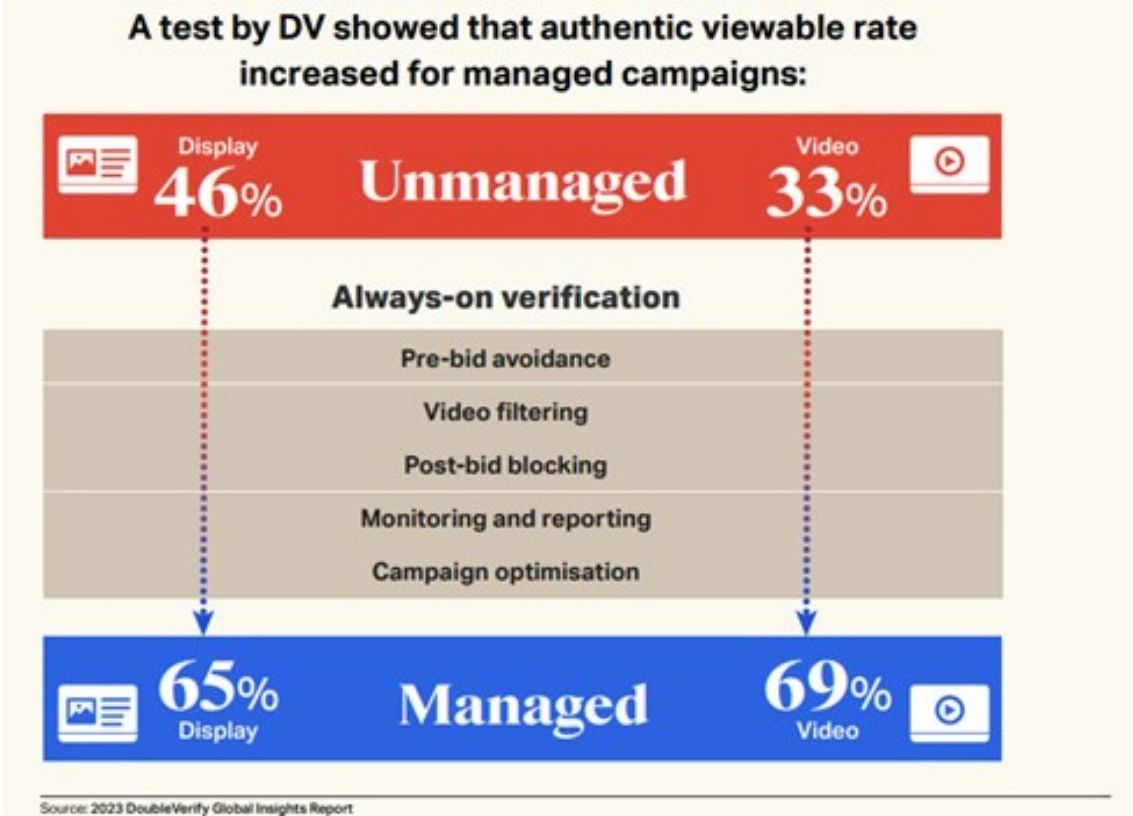
To advance these solutions, advertisers should invest in tools that unify data and improve standardisation. Training teams to balance data with creativity will keep campaigns innovative and audience-focused. Adopting a long-term view of metrics and expanding conscious media investment will help brands navigate challenges while maintaining trust and relevance in a fast-changing media landscape.
AI Skills Gap
AI is transforming media planning through automation, optimisation, and data analysis. By 2030, 95% of global media spend is predicted to be AI-enabled, with over half currently in the social media sector (McDonald, 2024). However, rapid AI adoption has revealed a skills gap:
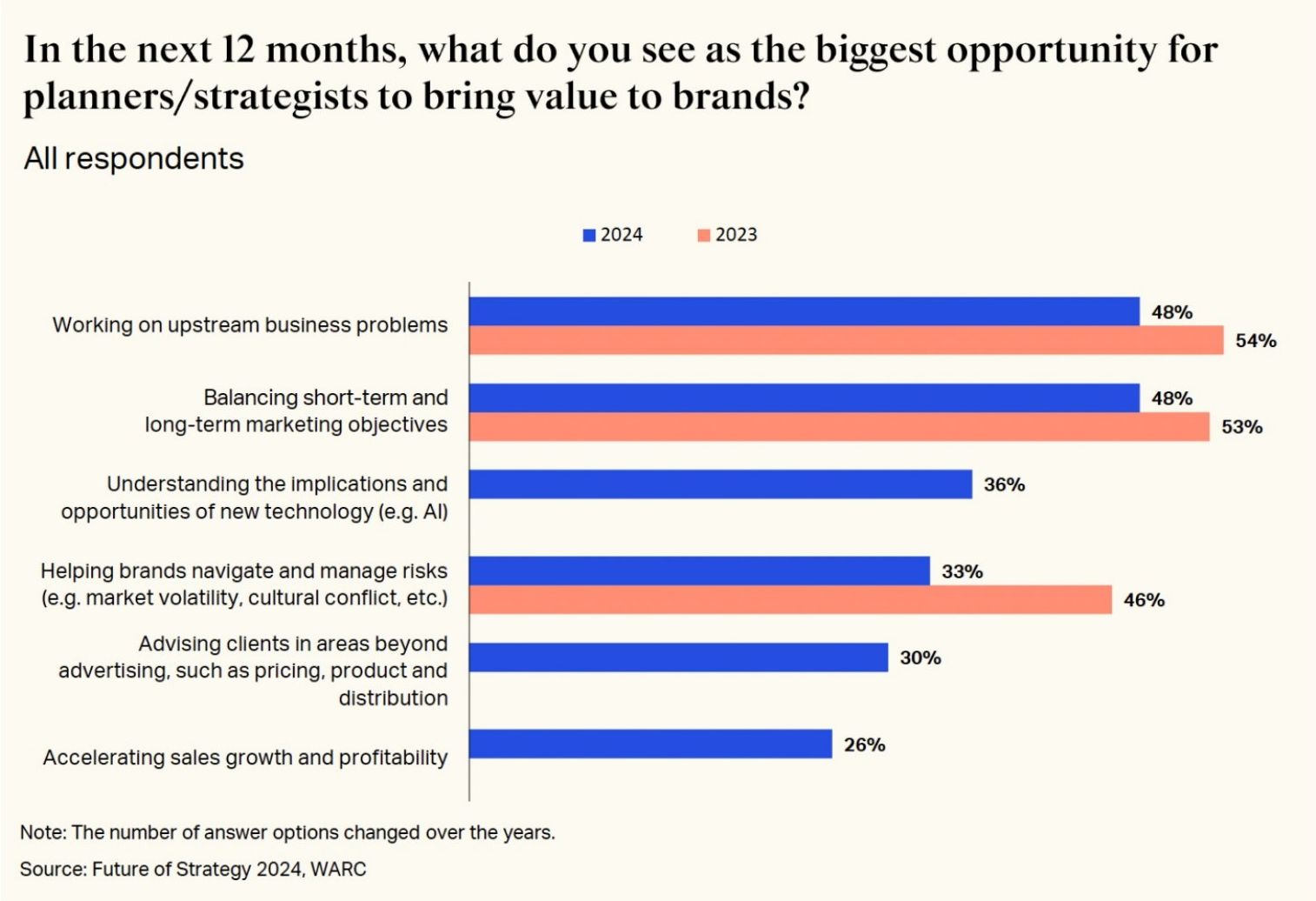
Lack of Expertise: While 36% of strategists see understanding AI as a key opportunity, over a quarter lack the training to use it effectively (Tiltman, 2024).
Over-Reliance on AI: Without proper oversight, AI can produce skewed outputs, lack creativity, and perpetuate biases in data (Tiltman, 2024).
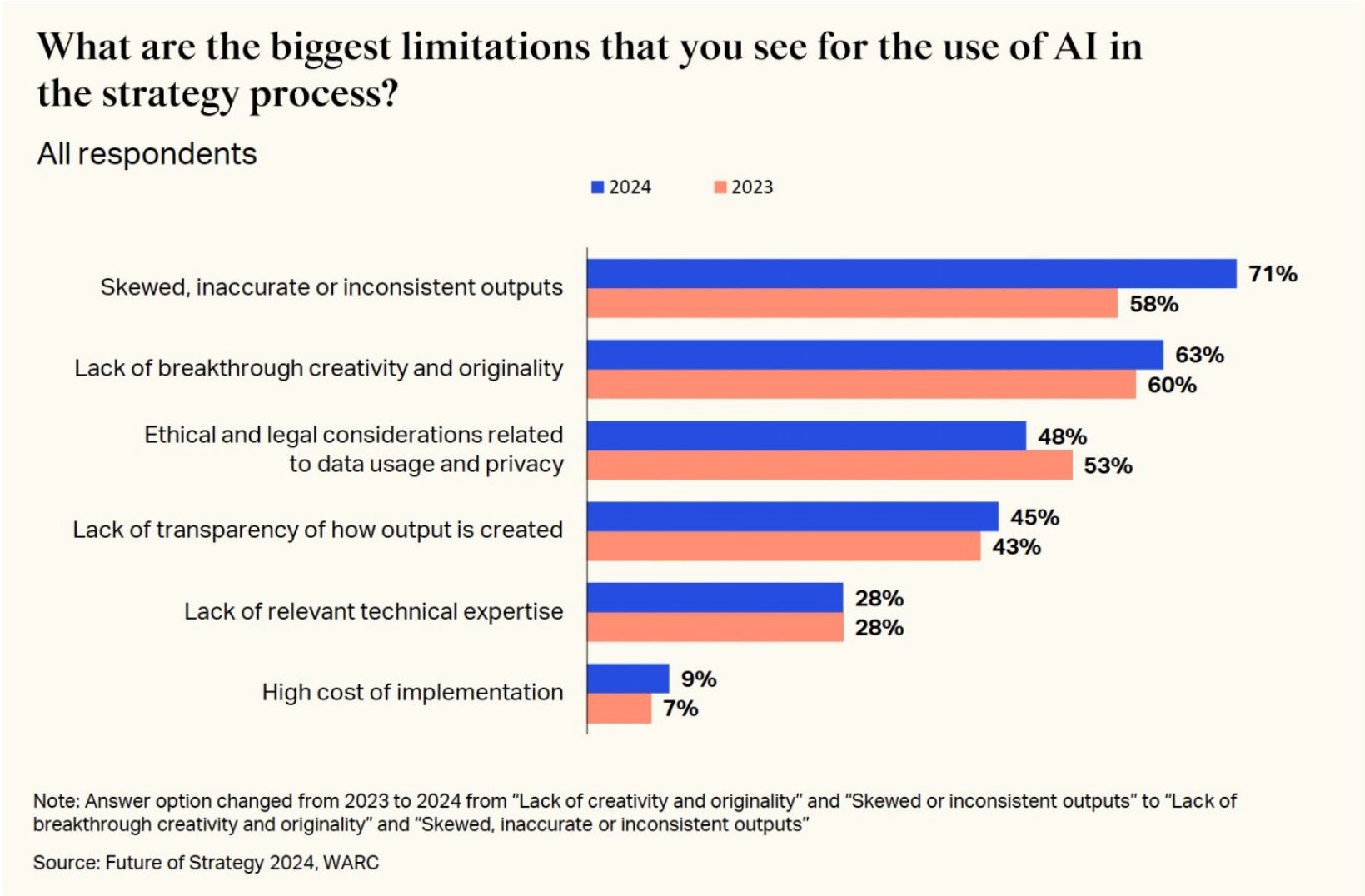
Advertisers must invest in training that empowers teams to use AI as a tool rather than a crutch. This includes understanding when to challenge AI outputs and injecting human creativity and cultural insight into campaigns.
So, What Are the Biggest Barriers?
Media planning today is no easy task. With fragmented platforms, overwhelming data, and the rise of AI, advertisers face big challenges. But there's a way forward. By embracing omnichannel strategies, balancing data with creativity, and using AI as a tool — not a replacement for human insight — brands can stay ahead.
Live posts
Reference list
- Bold, B. (2024). 58% of Brands See Retail Media 'Fragmentation' as a Key Barrier to Investment | WARC.
- DoubleVerify (2023). 2023 DoubleVerify Global Insights Report.
- Kirk, R. (2023). Fragmentation Forces Media Planners to Rethink the Founding Principles of Their Craft | WARC.
- McDonald, J. (2024). Global Ad Spend Outlook 2024/25: A Decade of Consolidation | WARC.
- Stringer, P. (2025). The Future of Media 2025 | WARC.
- TheTradeDesk (2024). The Untapped Opportunity of Omnichannel, U.S, U.K, 2024.
- Tiltman, D. (2024). The Future of Strategy 2024 | WARC.
- Walch, K. (2024). How Generative AI Is Driving Hyperpersonalization. Forbes.
- WARC (2024a). Future of Strategy 2024 — Opportunity for Planners/Strategists Infograph.
- WARC (2024b). Future of Strategy 2024 — Biggest Limitations for AI in Strategy Infograph.
- WARC Best Practice (2024). What We Know about Brand Safety | WARC.
- WARC Exclusive (2024). The Marketer's Toolkit 2025 | WARC.
— Bex Sutton